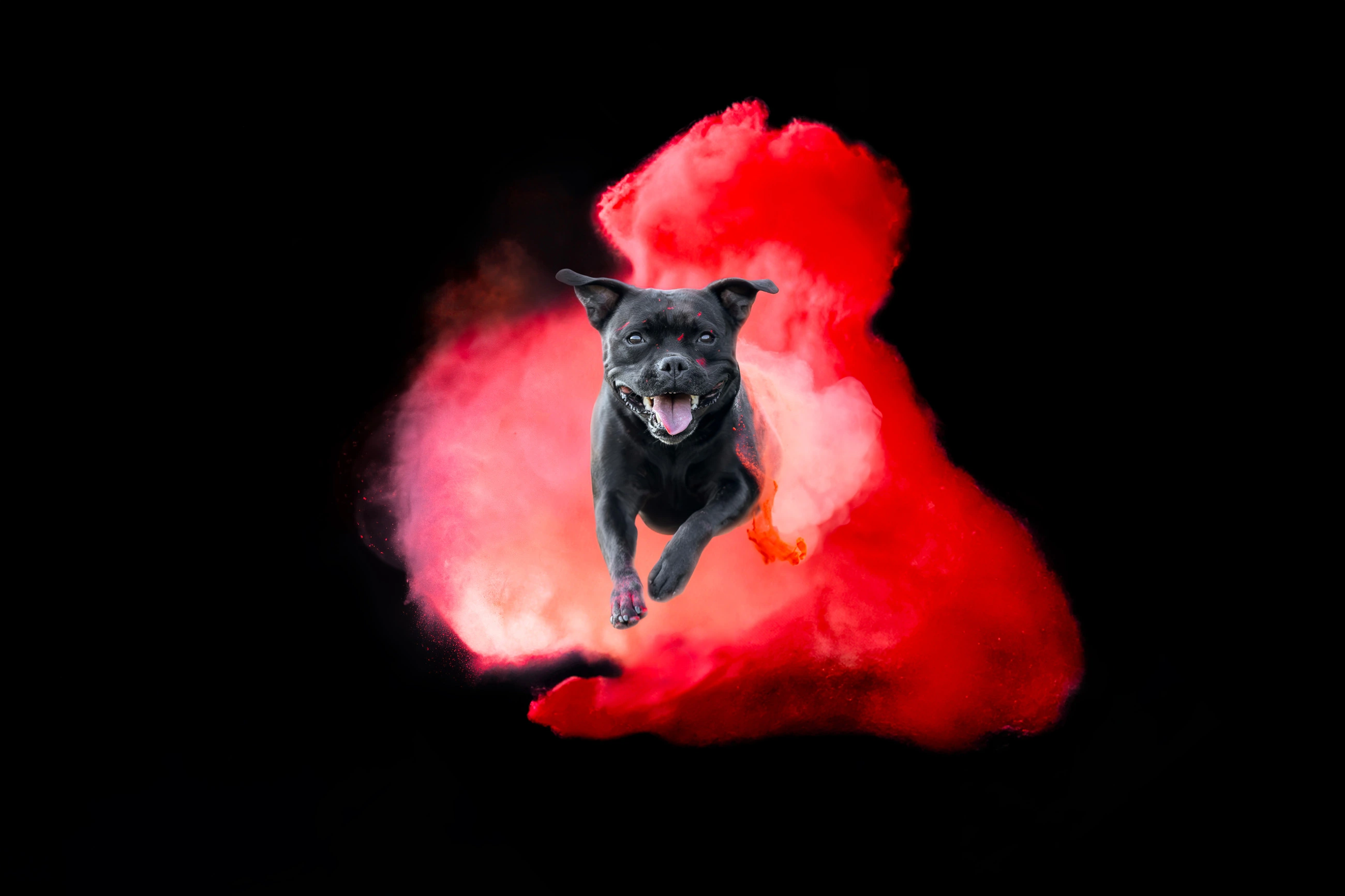

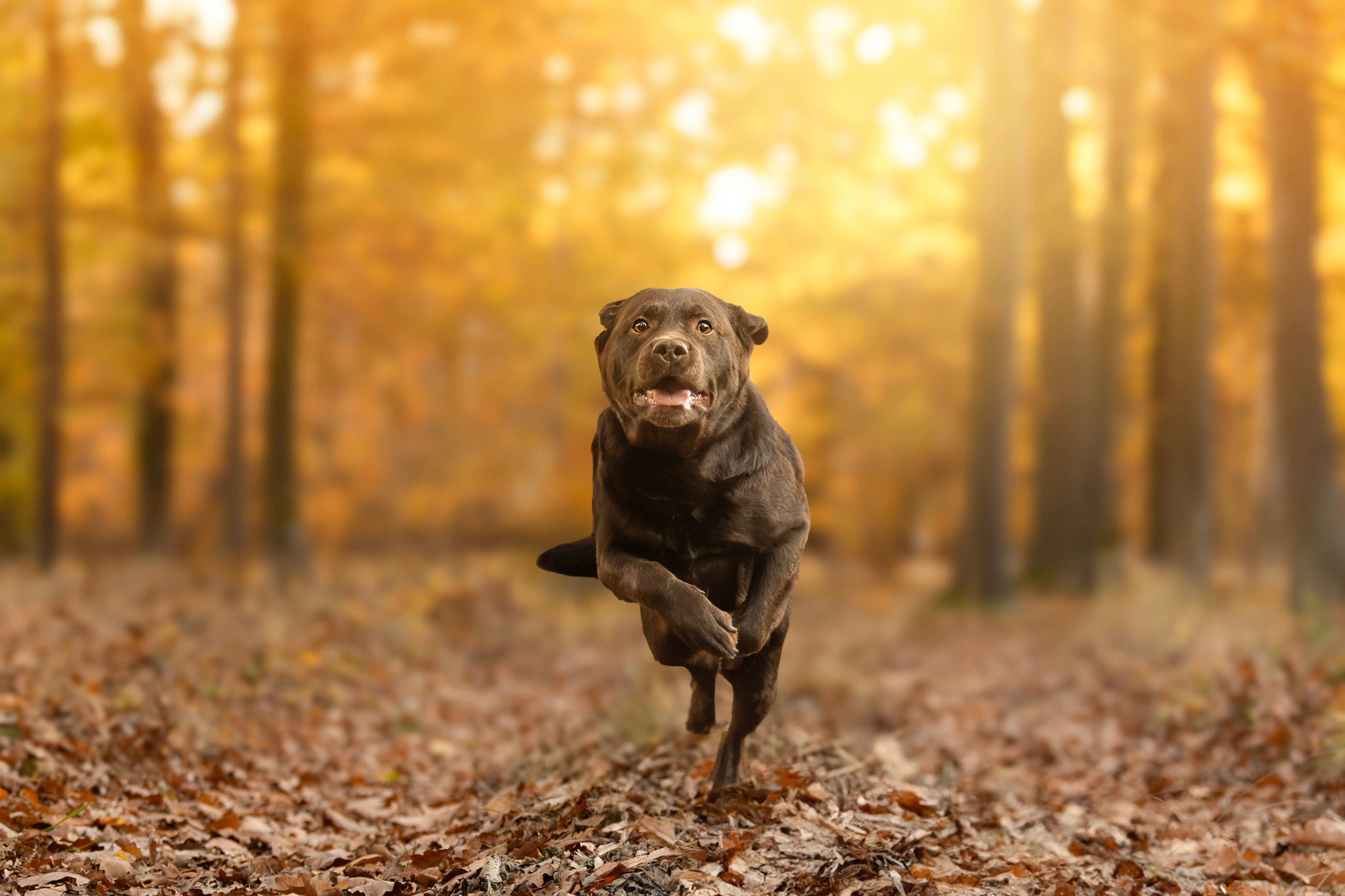
A running dog is one of the most beautiful things you can photograph. It is also one of the hardest. Dogs move fast, unpredictably, and they never respond to "one more time, but slower". The good news: most blurry photos come down to three or four things you can fix.
01A fast shutter speed comes first
A blurry dog almost always means the shutter was too slow. For a running dog use 1/1000 s or faster, for a jump or a really fast dog go to 1/2000 s. On a camera, shutter priority mode (S or Tv) does the job. Let the camera work out aperture and ISO.
- Calm walk: 1/500 s
- Running: 1/1000 to 1/1600 s
- Jump, fetch, sprint: 1/2000 s or faster
A fast shutter needs a lot of light. That is why action works best outdoors in daylight. At dusk or in the woods the camera will push the ISO and the photo gets grainy. A little noise still beats a soft dog.
02Focus: let the camera track the dog
Switch to continuous autofocus (AF-C or AI Servo). The camera keeps refocusing for as long as you hold the shutter. Newer mirrorless bodies can recognise an animal and stay on its eye. If yours has that, turn it on. On older bodies, use the centre focus point and keep it on the dog's head.
Add burst mode. Out of ten frames from one run, two or three are usually good: paws off the ground, ears up, eyes open. Taking a single frame and hoping does not work even after ten years of doing this.
03Get down to the dog's level
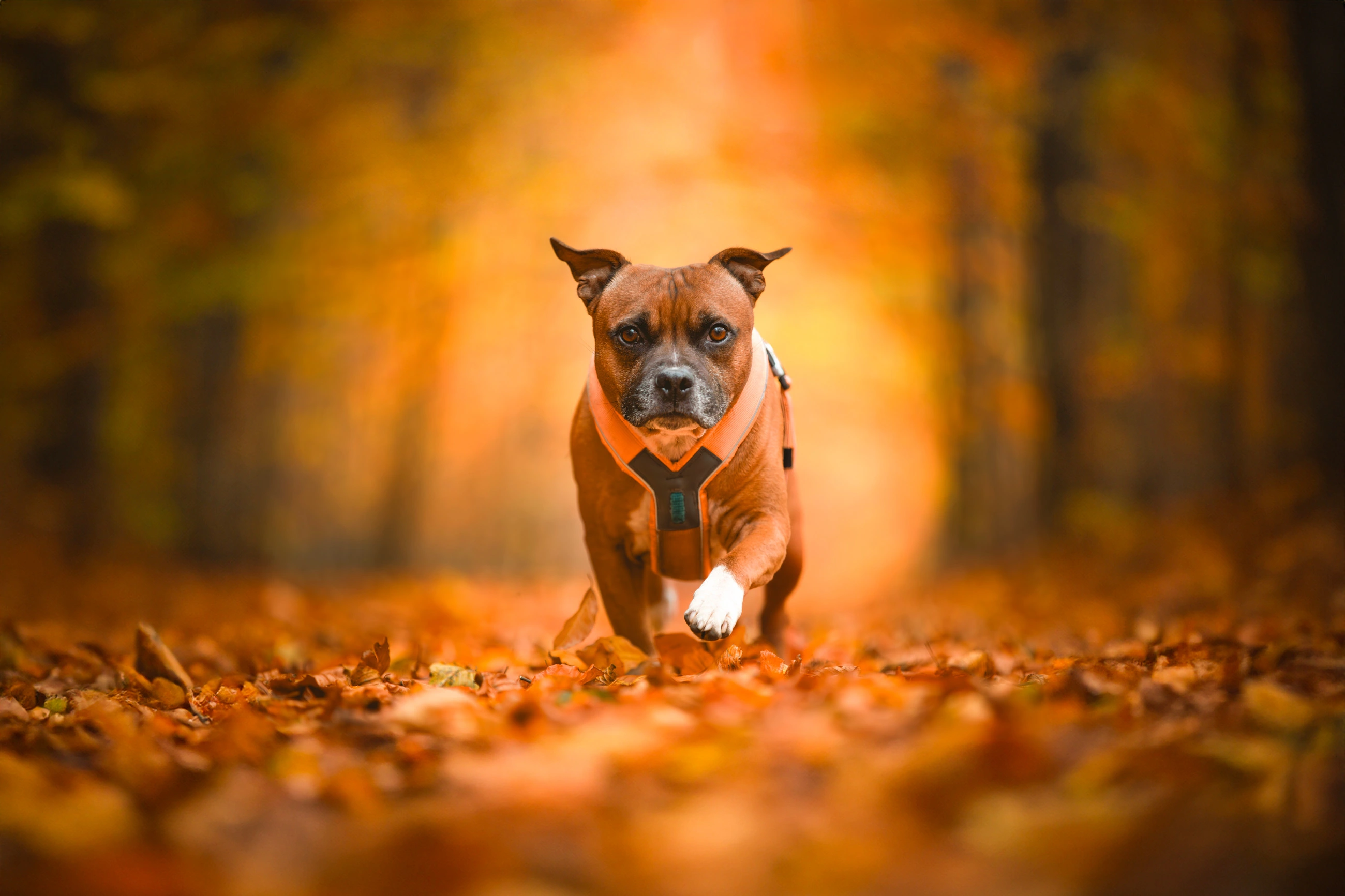
A photo from above shows the dog's back and some lawn. Kneel or lie down and you get expression, flying paws and a background that melts away. Yes, your knees will get wet. It comes with the job.
04The dog should run towards you
A dog running straight at the camera looks best. How to set it up:
- One person holds the dog, the other calls it from next to the camera.
- Does your dog know "stay"? Then two of you can do it: stay, walk away, lie down, call.
- Hold a toy or treat right above the lens. The dog then looks into the camera, not past it.
- Pick a straight, clear stretch with no holes or sticks. The dog is watching you, not its feet.
05Light and background
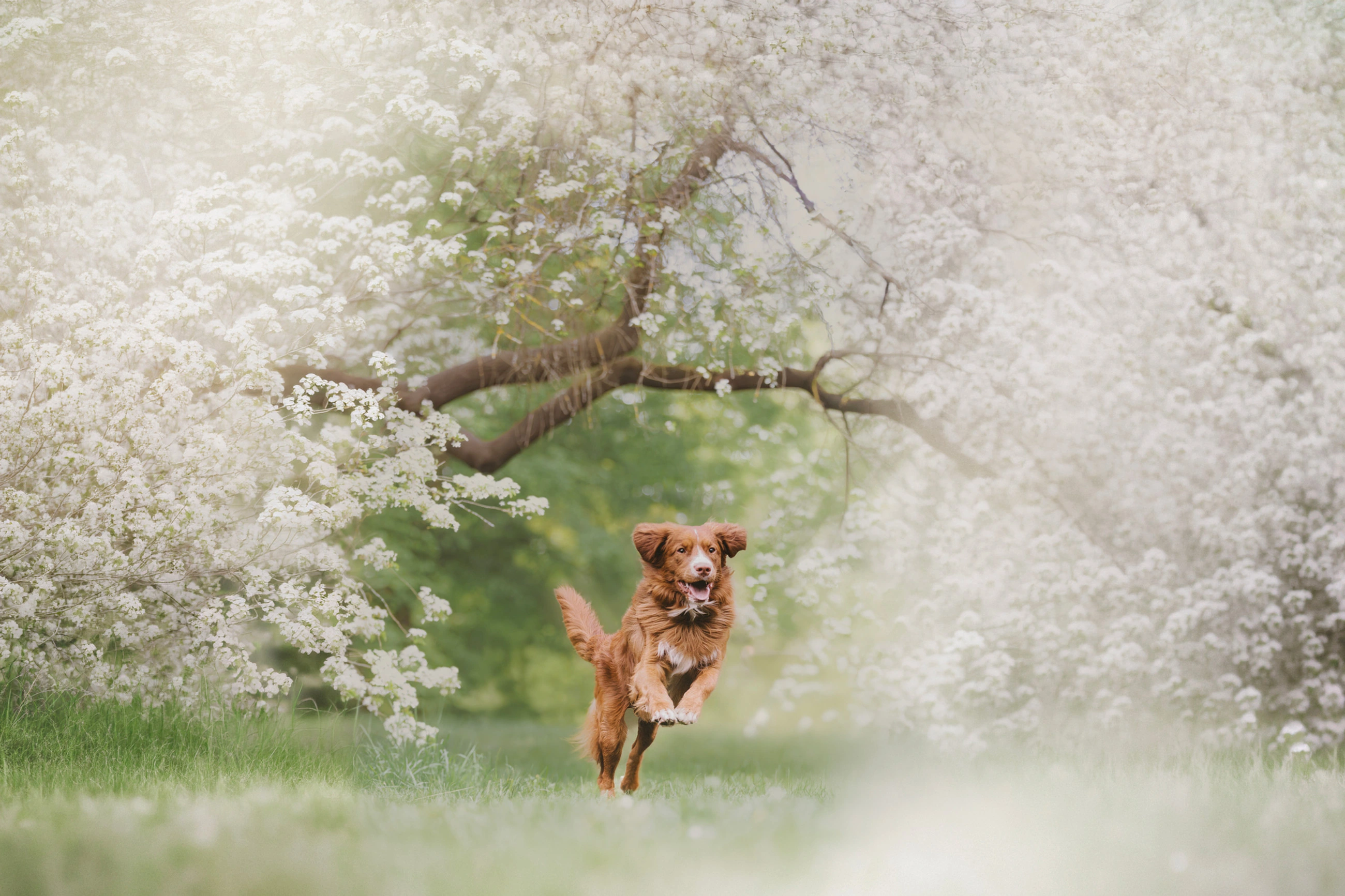
Midday sun gives hard shadows and blown-out fur. The nicest light is in the morning and an hour or two before sunset. A dog running against low sun gets a rim of light, and flying drops or dust glow.
Keep the background simple and far away. A meadow with trees in the distance works better than a fence five metres behind the dog.
06What about a phone?
It works too, with limits.
- Shoot in full daylight. The phone will then pick a fast shutter on its own.
- Hold the shutter button to take a burst.
- Do not pinch to zoom. Let the dog run closer instead.
- Slow-motion video with a frame pulled from it is a last resort, but it sometimes saves the day.
07A dog is not a machine
Five or six sprints, then a break. Water, shade, time to sniff. A tired dog has its ears pinned back and its tongue down to the ground, and nobody wants that in a photo. Go easy on puppies, seniors and dogs recovering from an injury, and skip running completely in the heat.