

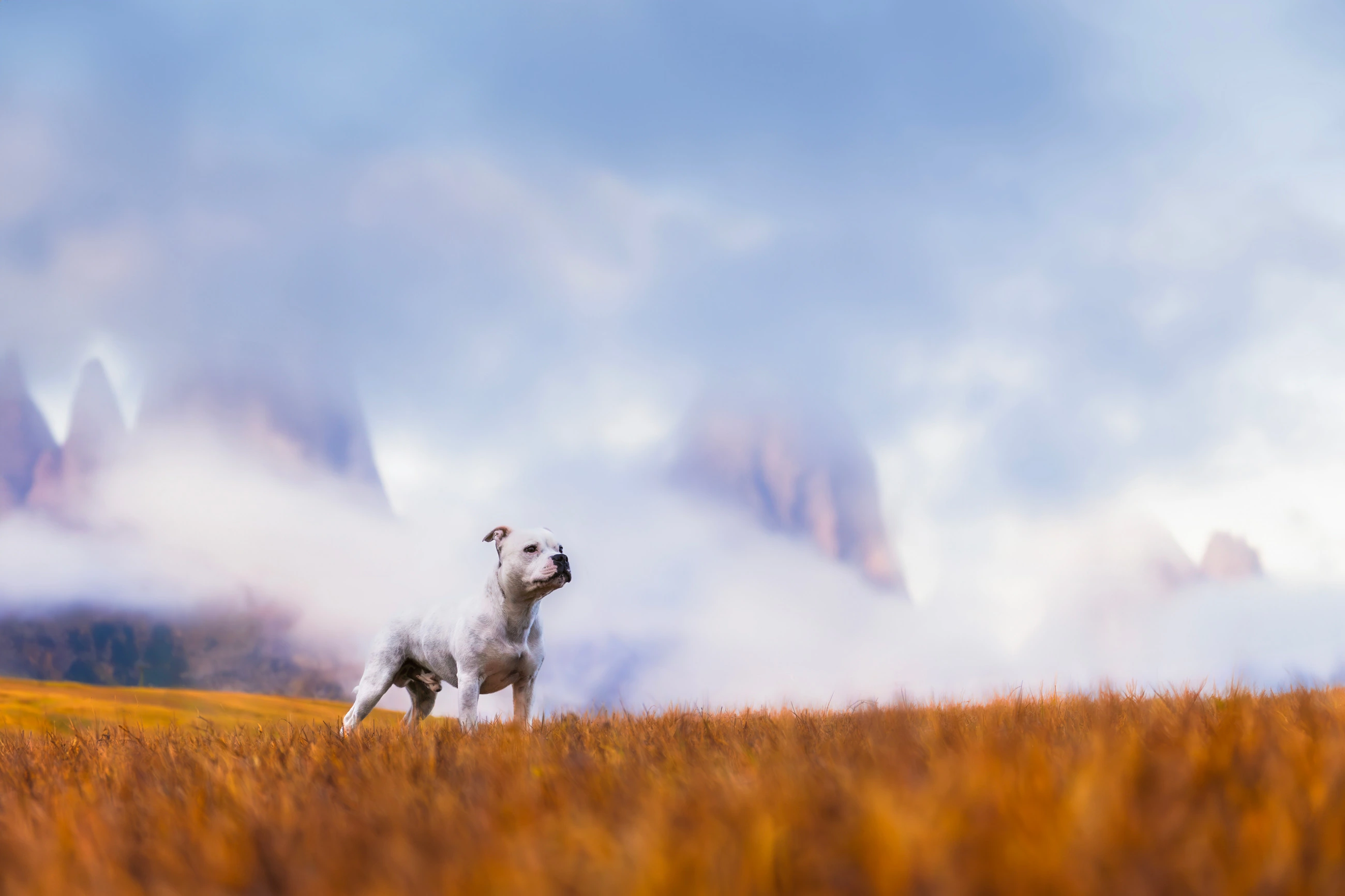
I have three dogs of my own and years of experience with positive training methods. I know that not every dog is thrilled by strangers, other dogs and new places. A dog that needs more distance still deserves beautiful photos.
01It all starts with what you tell me
I need to know in advance. What the dog reacts to: dogs, people, bikes, cars, noises, touch, fast movement, new places. What it looks like: barking, lunging, pulling, freezing, trying to run. And what helps. The more honest you are, the better it goes. Nobody is going to judge you.
02I choose the place and time for the dog
No park on a Saturday afternoon. I pick a place that is quiet and open, and a time when hardly anyone is around. Early morning is usually best. It also has the nicest light.
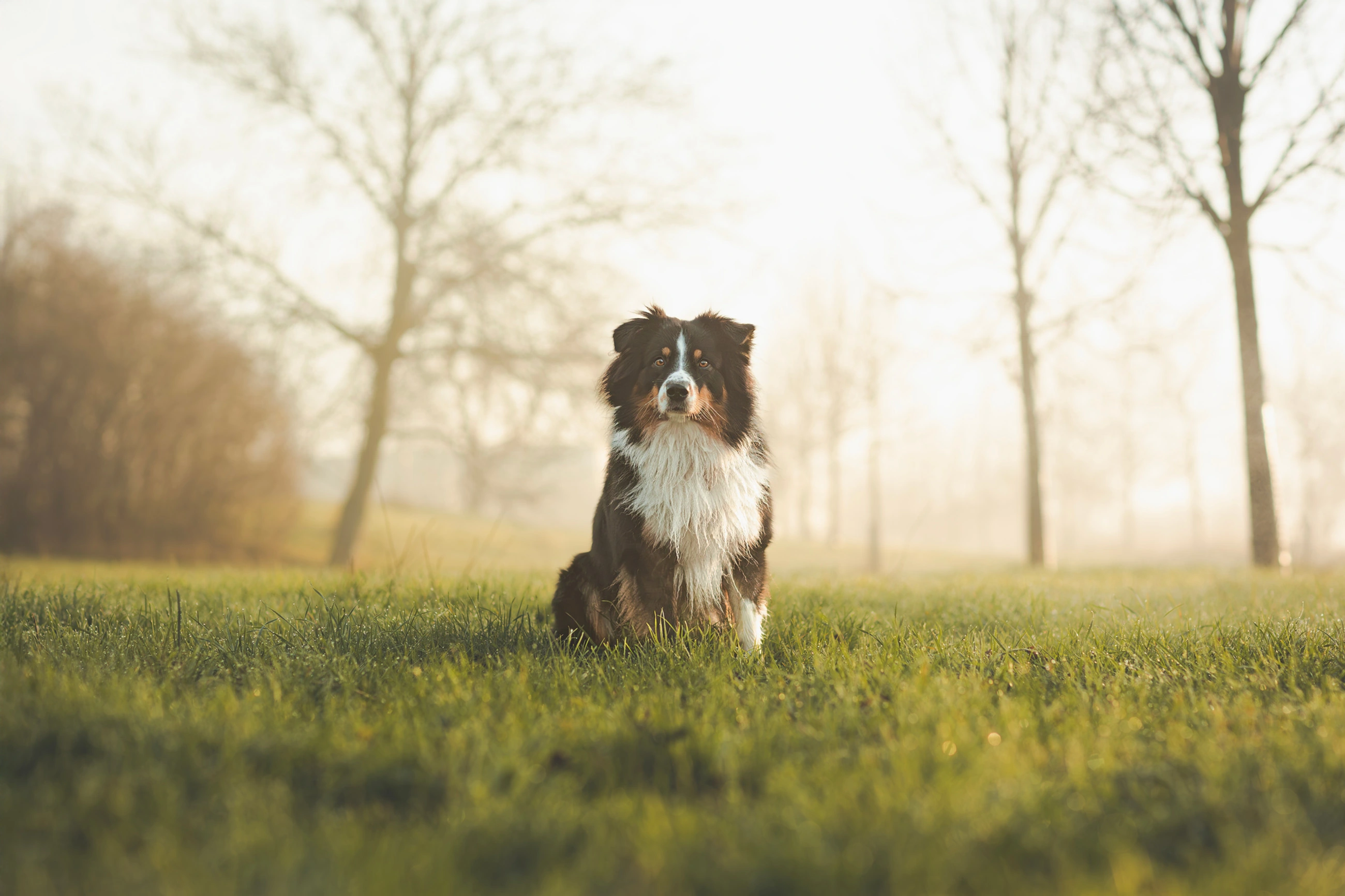
03A lead is fine
The dog can stay on a lead or a long line the whole time. I will never ask you to let it off. The lead can often be removed from the photos in editing, if the particular frame allows it.
04I shoot from a distance
With a long lens I can stand far away and the dog does not have to deal with me. No touching, no leaning over the dog. At the start I let it look at me and sniff the place at its own pace.
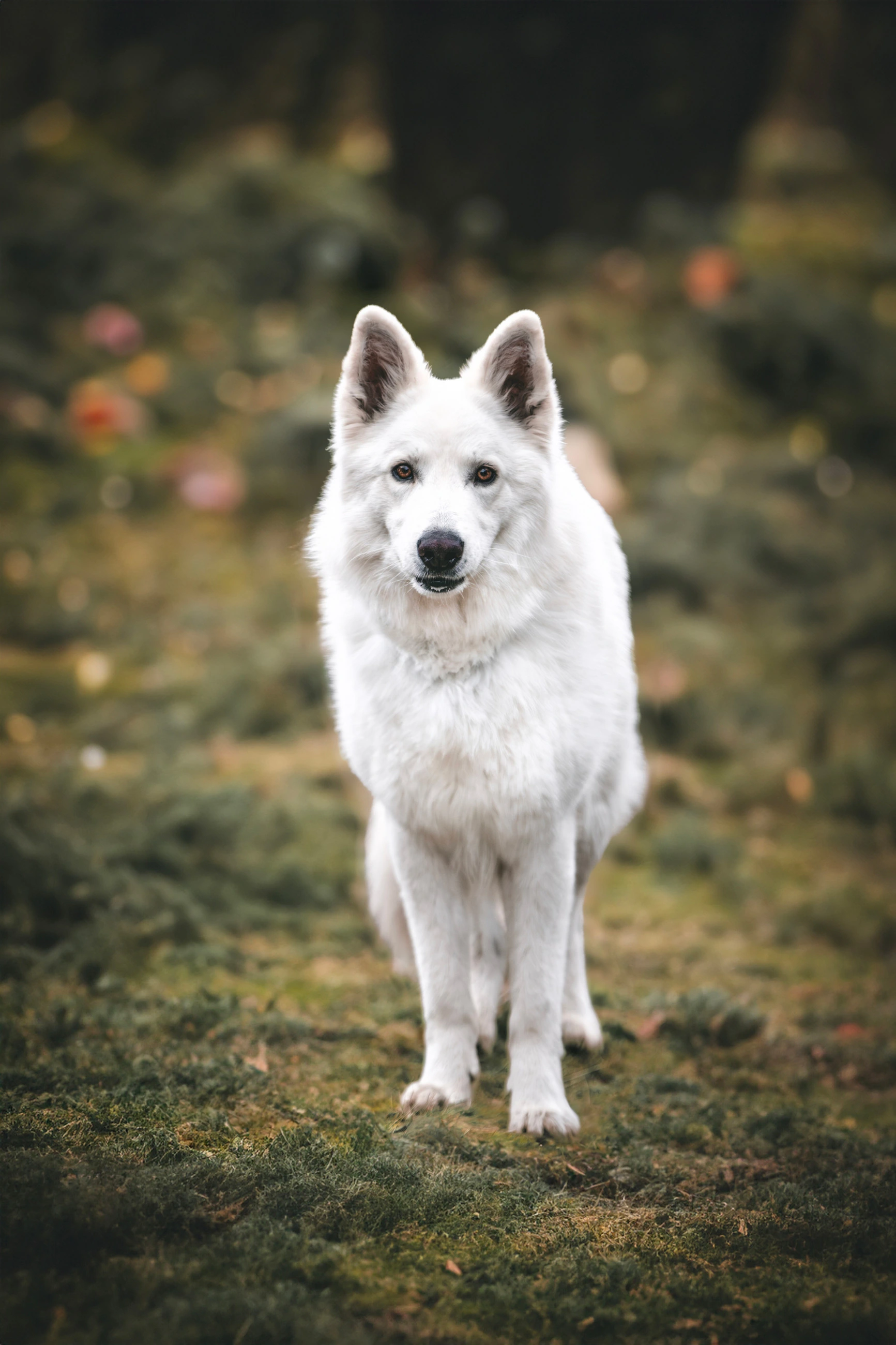
05The dog sets the pace
Short blocks, breaks, treats. When the dog needs to leave, we leave. When it is too much, we finish early. The dog's safety and comfort matter more than the photos.
06When to postpone
If the dog is going through a rough patch, has just had surgery or a stressful experience, let me know as soon as you can and we will work it out.