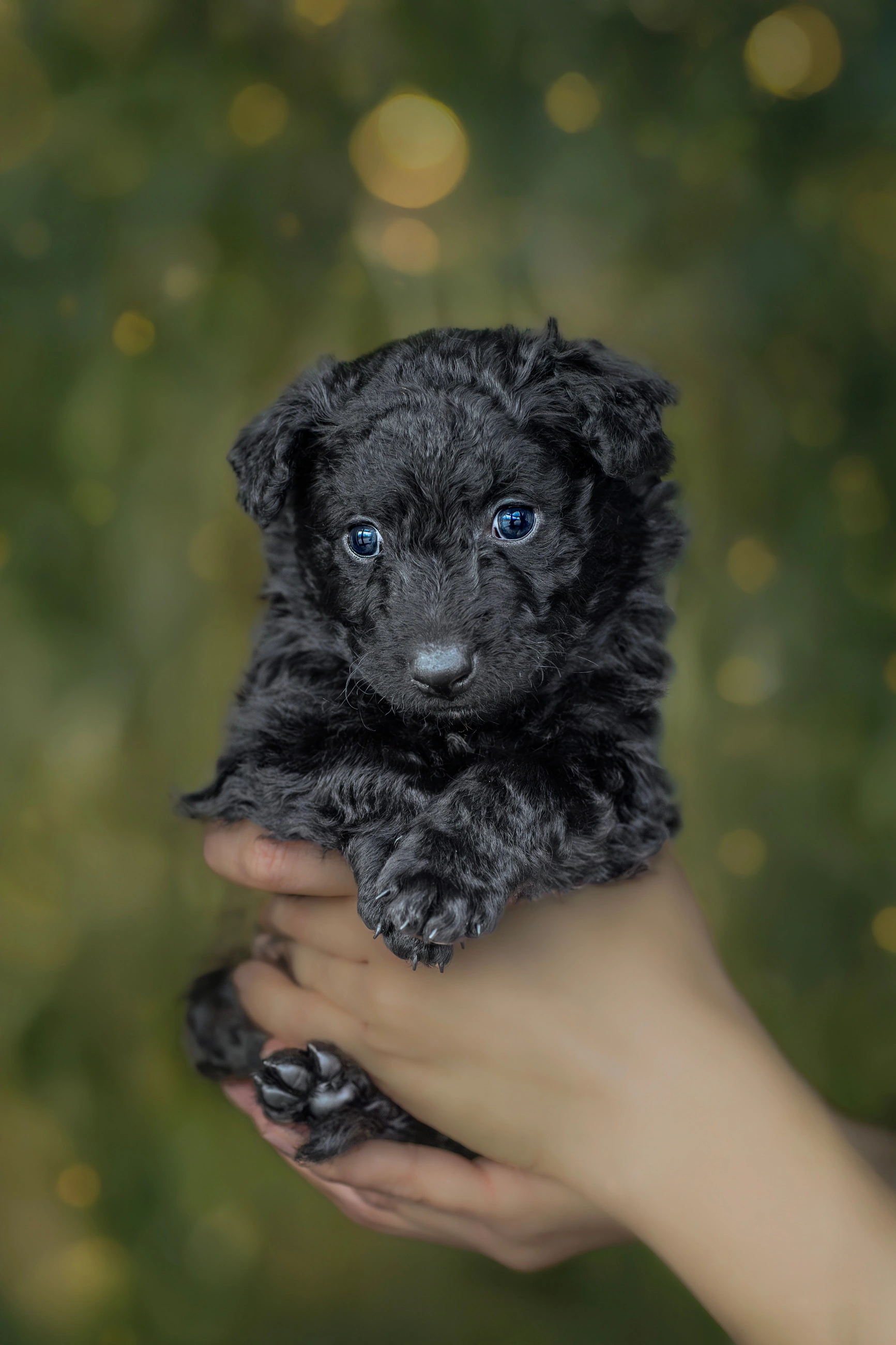

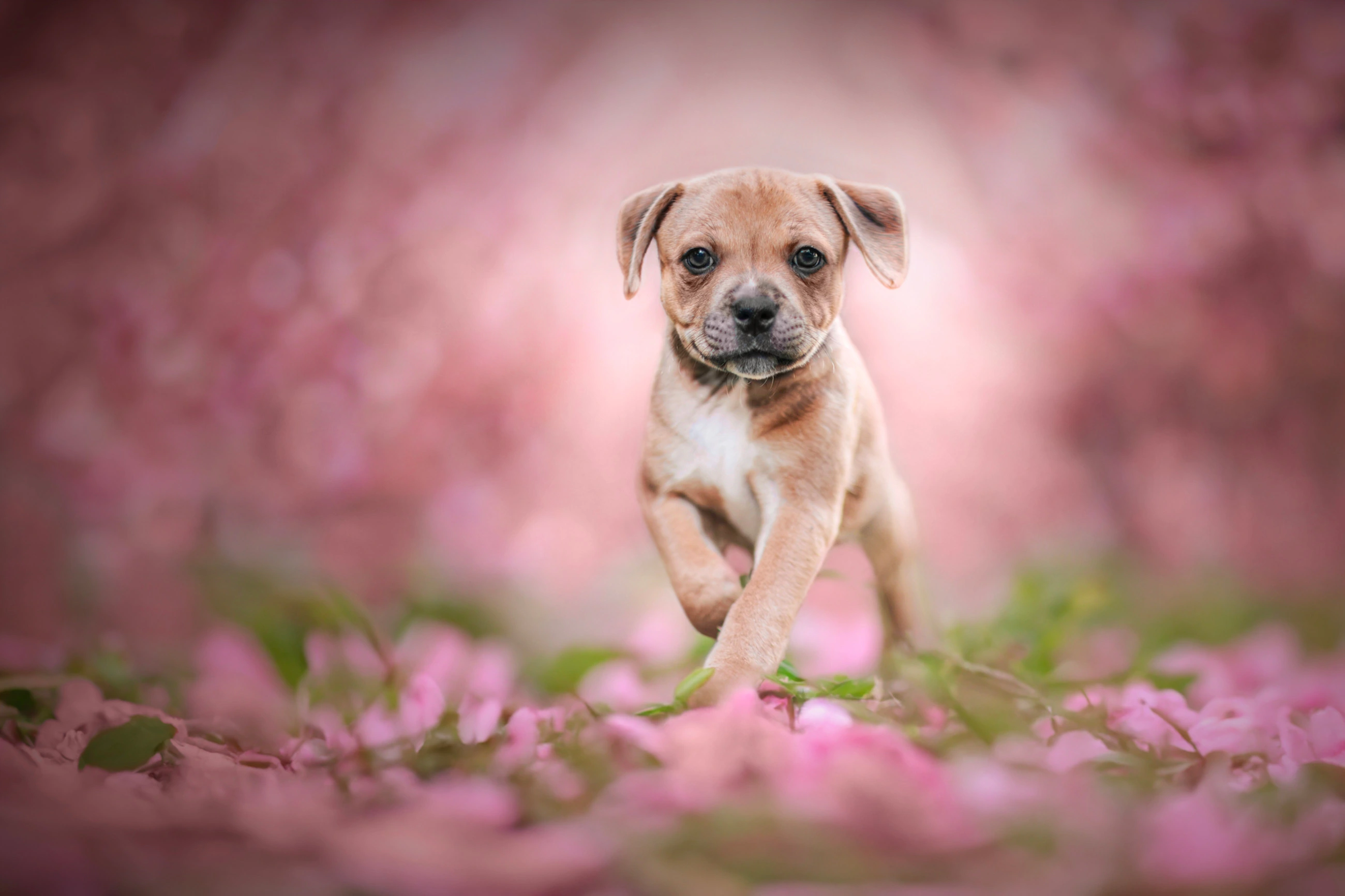
The puppy stage is short. Ears that have not decided which way to stand, paws that are too big and that "who, me?" look. In a few weeks it is all gone. That is why it is worth not putting the shoot off.
01When to come
Ideally a few weeks after the puppy comes home, once it has settled in and bonded with you. Shooting outdoors in places where other dogs go makes sense only after vaccinations are complete. Check the timing with your vet. Until then we can shoot at home, in the garden or in the studio.
02Expect a short attention span
A puppy can focus for a few minutes. Then it needs a break, a sniff, a chew on the lead or a nap. I build the shoot around short blocks and waiting. The best photos often happen when the puppy thinks it is all over.
03What works
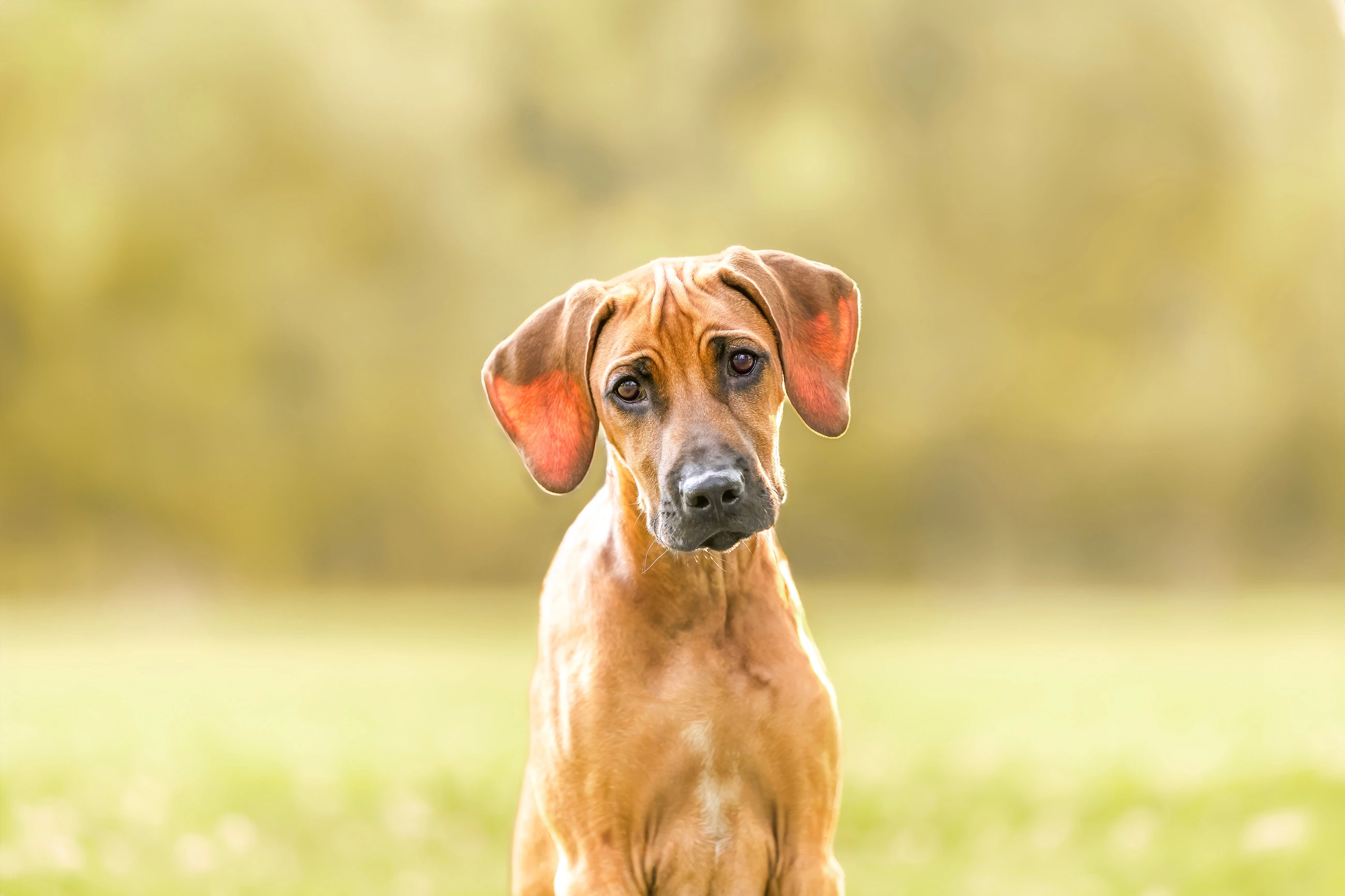
- Sounds. A squeaky toy, a rustling bag, the strange noises I make. You get a tilted head for a few seconds.
- Puppy level. That means lying down.
- A small space. A puppy on a jetty, on a tree stump or in your arms will not run off.
- Two people. One watches the puppy, the other shoots.
04What not to do
- Do not push. A puppy that gets scared of the camera will remember it.
- Do not shoot after a meal or a long walk. It will fall asleep.
- Do not make it sit. It has a whole life for that.
05One year, three shoots
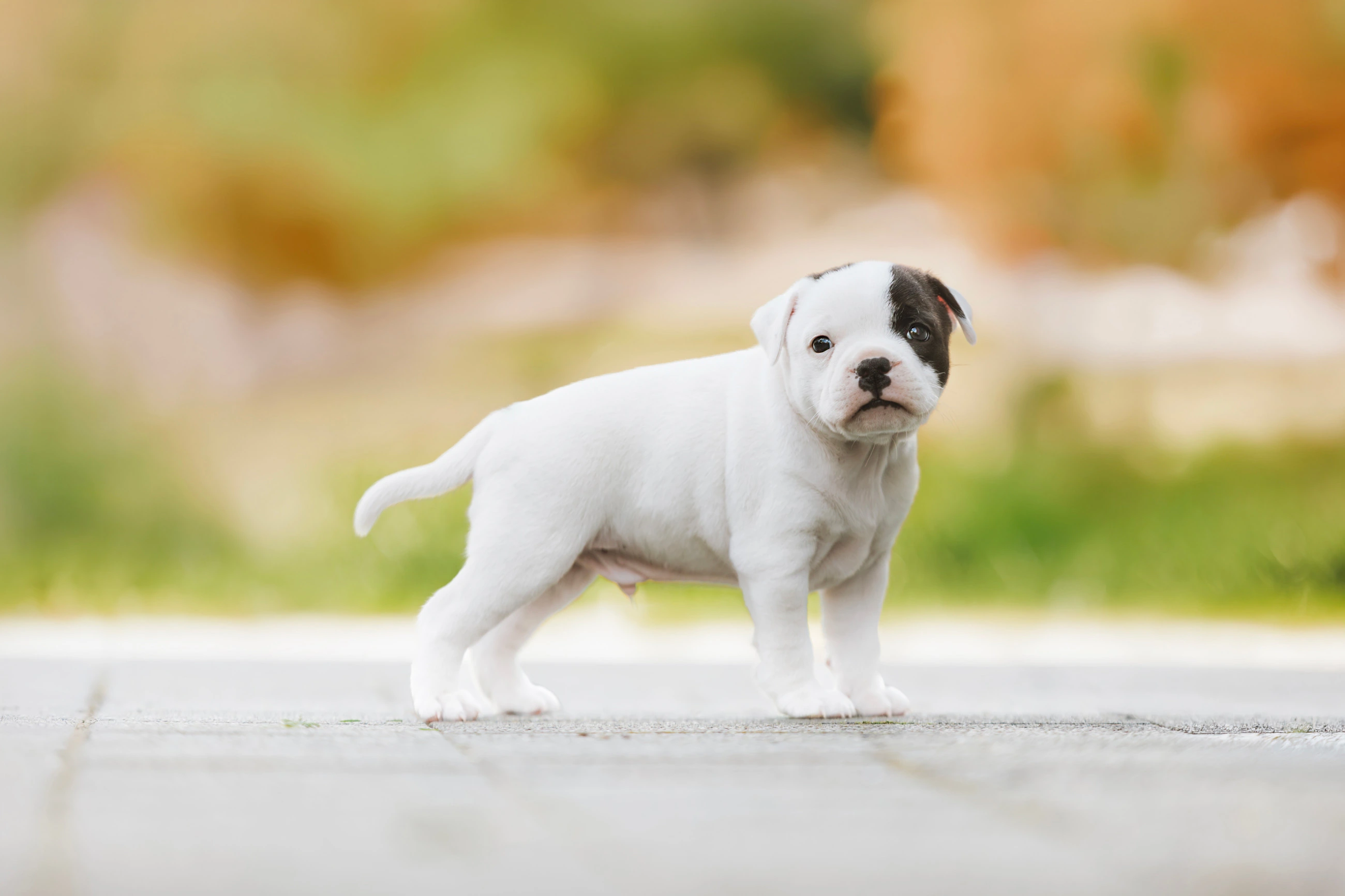
For those who want to see a puppy turn into a dog, I have the First Year package. Three shoots during the first year: after coming home, at around six months and around the first birthday. The same dog, different every time.